
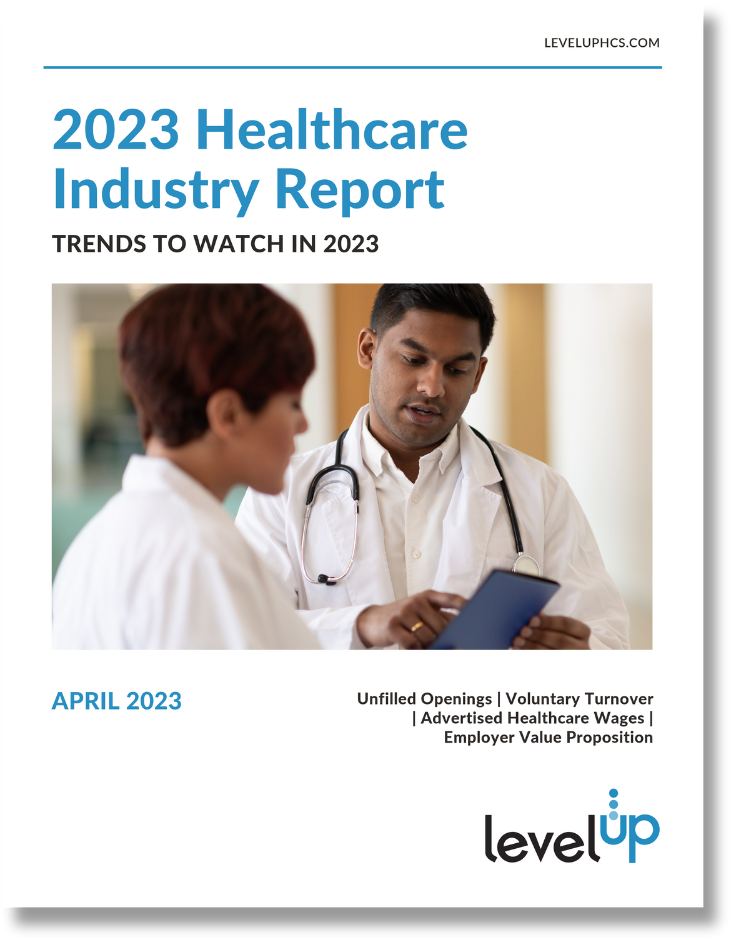
Get Your Copy of the 2023 Healthcare Industry Report
The Healthcare Report 2023 provides an in-depth look at workforce challenges facing hospitals, clinics, and healthcare providers. Ongoing talent shortages, rising demand for specialized skills, and increasing workforce costs continue to reshape the healthcare industry. This report examines how organizations are adapting to these pressures while balancing compliance, patient care, and financial sustainability.
Recruitment Process Outsourcing (RPO) is highlighted as a strategic solution for healthcare organizations navigating complex hiring needs. With access to advanced sourcing strategies, healthcare RPO partners can help fill critical roles more efficiently while reducing administrative burdens on HR teams. The report also explores how healthcare systems are integrating contingent workers and travel nurses into their staffing strategies to ensure flexibility and continuity of care.
Additionally, the 2023 report discusses workforce trends such as digital transformation, workforce mobility, and AI-driven recruitment tools. By applying data analytics and skills-based hiring practices, healthcare providers can better forecast demand and secure talent pipelines in high-need areas like nursing, allied health, and technology support. For leaders in talent acquisition, this report delivers valuable insights into building resilient, patient-centered workforces in today’s healthcare landscape.
The Growing Strategic Importance of Healthcare RPO
As workforce shortages intensify across the healthcare sector, more organisations are turning to healthcare RPO (Recruitment Process Outsourcing) as a long-term, scalable talent solution. Unlike traditional staffing or transactional recruitment, healthcare RPO provides a fully embedded, data-driven recruitment engine that helps hospitals, clinics, and health systems secure the clinical and non-clinical talent they urgently need. With demand for specialised roles rising and competition increasing, healthcare providers need a more modern, resilient way to attract and retain top talent — and healthcare RPO is quickly becoming one of the most effective strategies available.
One of the biggest advantages of healthcare RPO is its ability to stabilise hiring pipelines. By providing constant, proactive sourcing and screening, an RPO partner ensures that high-quality candidates are always moving through the funnel, even when demand spikes or internal teams are stretched thin. This reduces delays, lowers vacancy rates, and helps avoid the costly operational impact of short-staffed departments. For healthcare organisations delivering essential patient care, consistency and reliability in recruitment can have a direct effect on productivity, patient safety, and overall service delivery.
Healthcare RPO also supports providers with essential workforce analytics. Instead of reactive hiring, an RPO partner brings structured reporting, insights, and forecasting that help organisations understand where talent shortages are emerging, how hiring performance compares month-to-month, and where processes need to be improved. These insights aren’t just operational — they support long-term workforce planning and budget optimisation.
Perhaps most importantly, healthcare RPO gives organisations the flexibility to scale. Whether expanding into new regions, opening new service lines, or responding to seasonal surges, RPO teams can rapidly adjust hiring volume without compromising quality. This agility is critical in an industry where demand fluctuates and internal teams often don’t have the capacity to respond fast enough.
By adopting healthcare RPO as part of their broader workforce strategy, healthcare organisations are better equipped to build sustainable talent pipelines, protect quality of care, and stay competitive in a rapidly evolving market.